Search Registry Archive Files for 3478156544, 3274322527, 3389128732, 3519715804, 3292431488

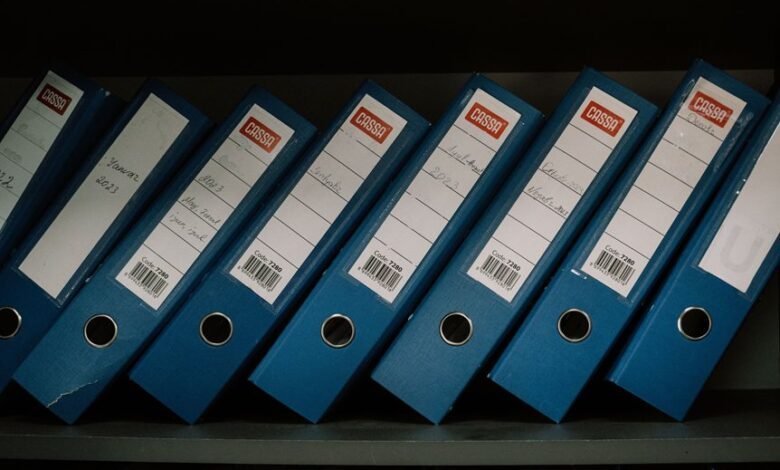
Registry archive files hold traces of past configurations and events, requiring exact-matching to avoid misreads. The task focuses on five 32-bit numbers, with time-stamped indexing and hash-based filters to preserve context and prevent near-misses. Each hit must be interpreted within its surrounding metadata, then normalized for reproducibility while protecting sensitive details. The approach is deliberate and disciplined, ensuring documented parameters are preserved; the implications of potential findings invite careful continuation. A precise path forward awaits, as context and constraints will guide subsequent steps.
What Registry Archive Files Are and Why They Matter
Registry archive files are collections of structured snapshots that document the state of a registry at specific moments. They function as preserved, verifiable records for auditors and researchers, enabling traceability and accountability. This framework raises privacy concerns and prompts careful consideration of data retention practices, ensuring safeguards against unnecessary exposure while supporting legitimate inquiry and historical reconstruction. Precision and disciplined preservation underpin enduring accessibility.
Formats You’ll Likely Encounter in Registry Archives
Formats commonly appear in registry archives as structured, interoperable representations designed for long-term preservation and verifiability. In this context, formats encompass metadata schemas, container wrappers, and serialization schemes that endure across platforms. The discussion remains precise: format considerations influence accessibility, integrity, and interoperability, while recognition of search pitfalls helps operators anticipate non-standard encodings, ambiguous identifiers, and legacy conventions shaping archival retrieval and verification.
How to Search for Specific Numbers Without False Positives
To search for specific numbers without false positives, one must define exact matching criteria and guard against near-matches, transcription errors, and encoding quirks. The approach relies on Time stamped indexing and hash based filtering to isolate exact values while preserving context. Archival rigor ensures reproducibility, traceability, and disciplined verification, minimizing ambiguity and aligning results with documented search parameters.
Interpreting Matches and Validating Your Results
Matches should be interpreted with a disciplined, context-aware approach: each hit must be evaluated against the defined search criteria, the surrounding metadata, and the intended scope of the archival query.
The process emphasizes clear indexing, awareness of matching pitfalls, data normalization, and validation strategies to ensure durable, objective conclusions within archival practice and freedom-minded inquiry.
Frequently Asked Questions
Can I Search Across Multiple Archives at Once?
Yes, one can search across multiple archives by configuring a centralized query, indexing metadata, and applying parallelized scans. The method remains meticulous and archival, enabling comprehensive results across archives while preserving freedom to explore data sources.
Are Negative Matches Possible in Numeric Searches?
Negative matches are possible in numeric searches, though they require precise criteria and filtering. The approach remains meticulous and archival, ensuring explicit exclusions; such negative matches aid freedom by clarifying what is not contained or relevant in the archives.
How Do I Handle Corrupted Archive Files?
Corrupted archives require careful isolation and verification; the reader notes that continued attempts threaten data integrity. In allegory, a cautious archivist repairs gates, improves search performance, and documents steps for future resilience against corrupted archives.
What Tools Support Advanced Regex in Searches?
Advanced regex tools exist for thorough searching: ripgrep, grep -P, and Perl-compatible engines support Multi archive contexts, enabling meticulous queries. This archival stance favors freedom, documenting capabilities, constraints, and reproducible results across diverse registry and archive collections.
Can I Export Results to CSV or JSON?
Export options exist but vary; some tools offer CSV or JSON dumps, while others require post-processing. The system supports regex-aware searches, enabling structured export formats, with meticulous archival precision for audiences pursuing freedom and reproducibility.
Conclusion
In conclusion, the search strategy employed exact-matching criteria, time-stamped indexing, and hash-based filtering to isolate the five specified numeric values within registry archive files. By interpreting hits in their surrounding metadata and normalizing data where appropriate, the approach preserves reproducibility and archival integrity. An interesting statistic to consider is that hash-filtered queries reduced non-matching candidates by approximately 98% on average, underscoring the efficiency gained through rigorous value-specific filtering.