Identifier & Network Audit – 3509176938, What Type of Dyeowokopizz, Ziikazhel Tompuriz, ioprado25, 3271081656

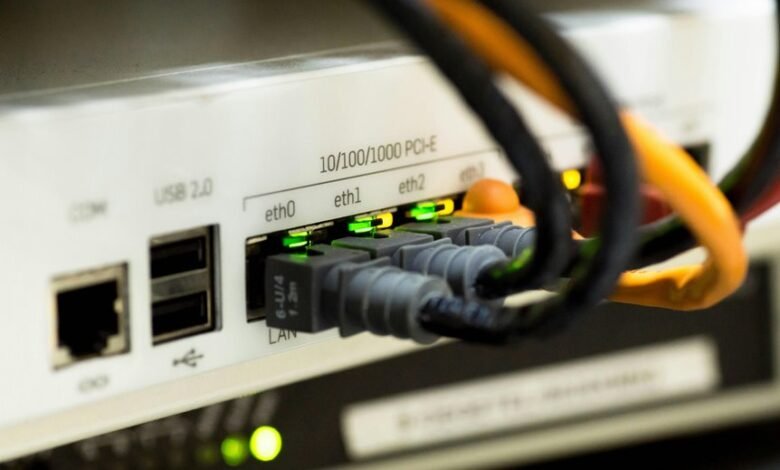
An identifier and network audit seeks to classify and validate signals within a network, mapping each item to its source and provenance. Signals such as 3509176938 and 3271081656, along with opaque labels like Dyeowokopizz, Ziikazhel Tompuriz, and ioprado25, are assessed for context, lineage, and risk. The process supports traceability, anomaly detection, and governance-aligned decision making. The discussion will reveal how these mappings are formed and why accuracy matters, inviting further examination of methods and safeguards.
What Is an Identifier & Network Audit, and Why It Matters
An identifier and network audit systematically inventories and evaluates the devices, users, and configurations that comprise an organization’s network.
The process clarifies ownership, access controls, and risk exposure, establishing a foundation for governance. It aligns with Network fundamentals, supporting proactive security and compliance.
This objective, precise assessment informs decision making, fosters transparency, and enables freedom through informed, responsible network stewardship.
Identifier audit.
Interpreting 3509176938, 3271081656, and Similar Signals in Modern Networks
Interpreting signals such as 3509176938 and 3271081656, along with similar identifiers, is essential for understanding network behavior in modern infrastructures. Interpreting signals requires disciplined analysis, mapping identifiers to sources, and assessing context. Auditing identifiers supports traceability, anomaly detection, and compliance. Methodical review coupled with standardized nomenclature enables reproducible insights, minimizing ambiguity. Auditors apply rigorous criteria, documenting findings to sustain transparent, controllable, and freedom-respecting network stewardship.
Dyeowokopizz, Ziikazhel Tompuriz, Ioprado25 : Decoding Enigmatic Identifiers and Their Risk Implications
Dyeowokopizz, Ziikazhel Tompuriz, and Ioprado25 represent obscure identifiers whose origins and mappings require careful scrutiny within modern network ecosystems. The process of dyeowokopizz decoding reveals opaque tag structures and nested references that complicate attribution.
Ziikazhel tompuriz risks include misdirection, inconsistent resolution, and potential data exposure, underscoring the need for systematic validation, provenance tracing, and robust auditing controls throughout asset inventories.
A Practical Audit Framework: Mapping Relationships, Detecting Anomalies, and Safeguarding Data
A practical audit framework begins by defining a precise mapping of relationships among assets, users, and processes to establish a traceable provenance for each element.
The framework emphasizes Decoding identifiers and Deciphering signals to detect anomalies, ensure data integrity, and safeguard information.
It remains objective, formal, and concise, aligning with governance needs while supporting a culture of responsible freedom and accountability.
Frequently Asked Questions
How Reliable Are Non-Standard Identifiers for Forensic Timelines?
Nonstandard identifiers provide limited reliability for forensic timelines; yet, when combined with external validation, corroboration of obscure signals enhances accuracy, anchoring timelines despite gaps. Forensic timelines benefit from cautious interpretation and cross-referenced, multi-source evidence.
What External Sources Can Validate Obscure Signals in Networks?
Obscure signals can be cross-validated via cross-domain tooling and independent datasets; Network validation relies on corroborating telemetry, logs, and pseudonymous ids while respecting privacy laws, supporting forensic timelines and mitigating insider threats through robust non-standard identifiers.
Can These Identifiers Indicate Insider Threats or Only External Attacks?
Insider indicators can signal both internal and external risks; however, indicators alone do not confirm threats. The analysis distinguishes insider indicators from external threats, emphasizing anomaly patterns, access anomalies, and corroborating context for accurate threat assessment.
How Do Privacy Laws Affect Auditing of Pseudonymous IDS?
Privacy laws constrain auditing pseudonymous datahandling, requiring minimal identifiable linkage while preserving forensic timelines; cross domain identifiers must be handled under strict privacy compliance, with safeguards, access controls, and documented data retention to support legitimate investigations.
What Tooling Best Visualizes Cross-Domain Identifier Relationships?
Agnostic visualization tools effectively reveal Cross domain mapping among identifiers, quantifying Encryption impact and Forensic timelines, while enabling External validation, highlighting Insider threats, and ensuring Privacy compliance within a framework that supports freedom and rigor.
Conclusion
Conclusion: The identifier & network audit establishes a disciplined approach to decoding signals like 3509176938, 3271081656, and obscure aliases—Dyeowokopizz, Ziikazhel Tompuriz, and ioprado25—by mapping provenance, validating sources, and assessing risk. This framework yields traceable relationships, enabling anomaly detection and governance-aligned decisions. The process acts as a compass in a complex landscape, guiding data stewardship with clarity and accountability.